
Rain & roofline care
Chimney Leak Repair & Water Managementin Orange County
Trace water entry across flashing, crowns, caps and masonry before choosing a repair or treatment.
Serving Orange County, California · Scope, access and appointment times are arranged for each property.
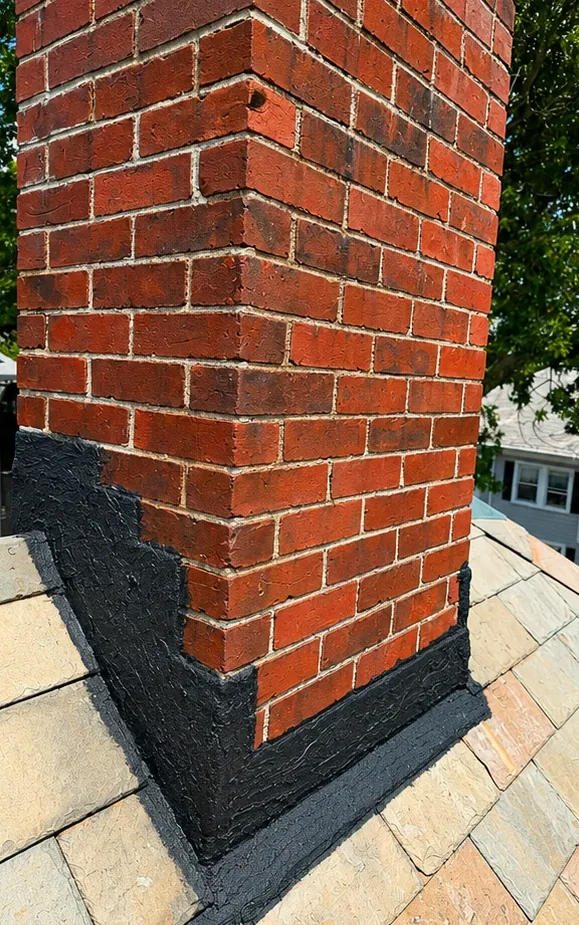
Understand the concern
Follow the water pattern before choosing a treatment.
The place where water appears may be different from where it enters. A useful leak record connects the stain or drip to weather, time and location. The assessment can then compare the chimney top, masonry and roof connection instead of treating every leak as a need for surface coating.
Changes worth documenting
- A ceiling stain beside the chimney, damp fireplace masonry or a drip that follows rain.
- A problem limited to wind-driven rain, or one that continues after the weather clears.
- Peeling finish, a recurring white deposit or a coating that is separating from masonry.
What the assessment should address
- The route from roof and flashing to interior staining, plus the crown, cap and relevant masonry joints.
- Earlier sealants or coatings, substrate condition, and whether proposed materials allow appropriate moisture movement.
Before the conversation
- Photograph the first visible wet area and record the date, rain direction if known and how long it remains damp.
- Bring roof-work and coating records. Avoid covering the evidence with paint or a new sealant before it is assessed.
Real photographs · Before & after
See the detail.
See the difference.
Explore photographic records from the owner’s project archive. Move each divider to see the individual views.
Owner’s project archive · PeakStone
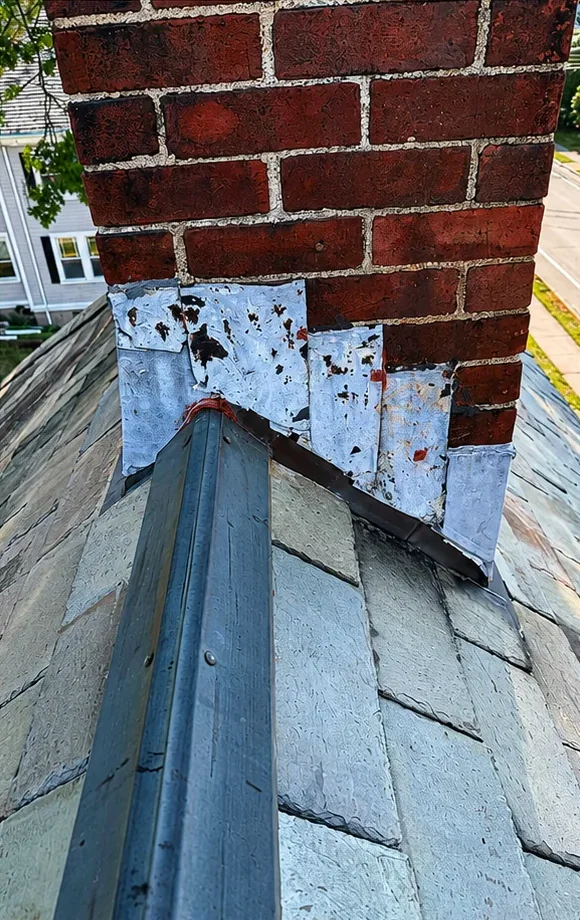
Same project, different camera views of the roof-to-chimney junction.
Planning the scope.
Write down where staining first appeared and whether it followed rain or wind-driven rain. That timing helps focus the assessment without proving the entry point.
Roof transitions, flashing, the crown, masonry and the chimney opening may each need attention. A recommendation should explain which interfaces were examined and what evidence supports the scope.
Water-repellent treatment is not a substitute for repairing an opening or incompatible detail. Any treatment must suit the material, and the estimate should distinguish the repair from the finish.
Common questions
Start with what you know.
Why can a chimney still leak after it was waterproofed?
A treatment cannot resolve every pathway. An opening, roof interface or unsuitable existing coating may remain. Ask which entry routes were assessed and what evidence supports the next repair, rather than simply repeating the coating.
What does white staining on chimney brick mean?
It can be a deposit of salts carried by moisture, often called efflorescence. Its appearance alone does not locate the water source or establish the repair. Document recurrence and have the moisture pathway considered.
Does a stain mean the crown is leaking?
Not necessarily. Water can travel before it becomes visible, so the surrounding chimney and roof details matter.
Should I coat the chimney before an inspection?
Avoid choosing a coating from one symptom. Preserve photographs and explain the pattern so the underlying condition can be assessed.