
California roofline care
After rain or wind: document the chimney from the ground.
A safe way to record water marks, changed caps and exterior masonry concerns without turning a photograph into a diagnosis.
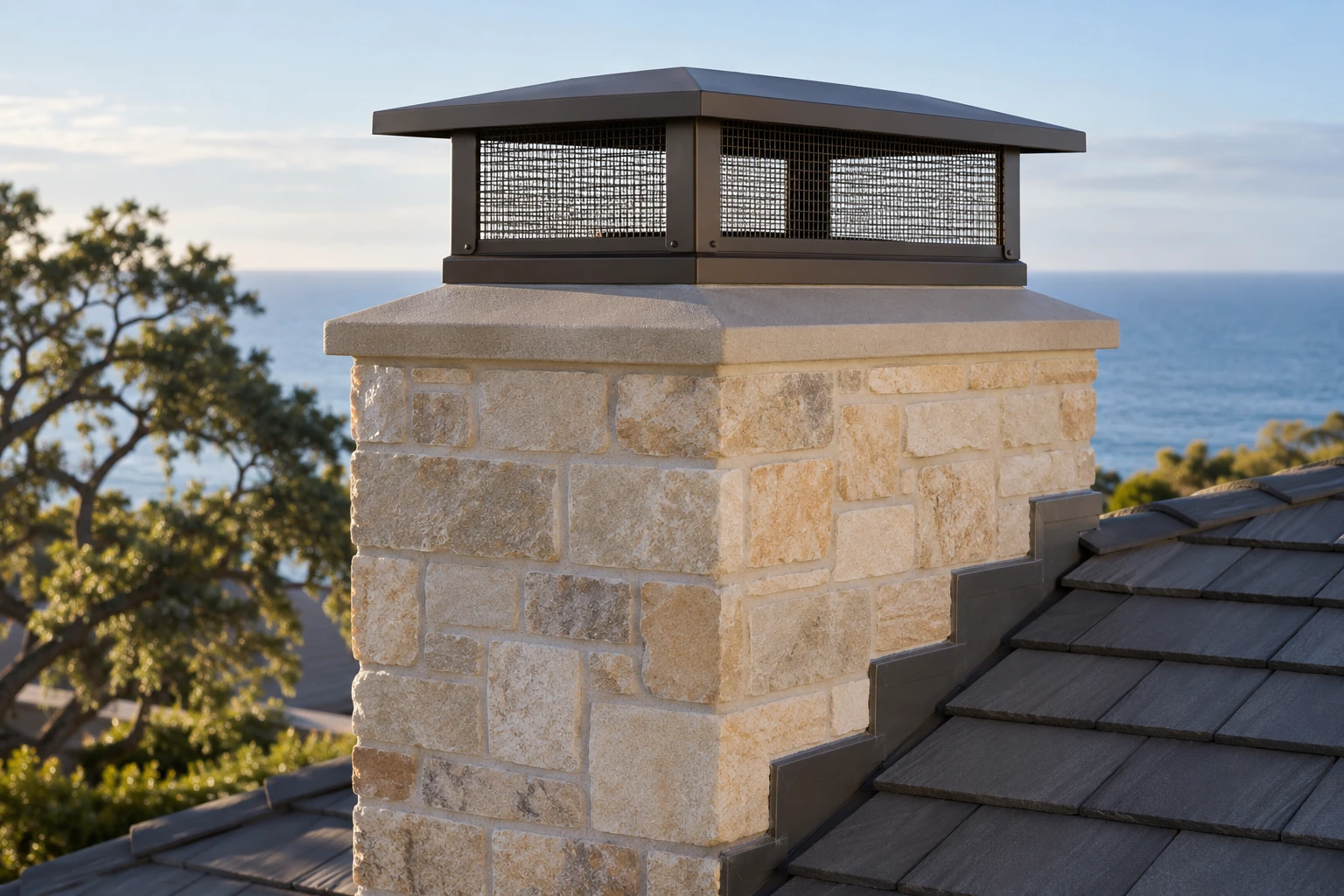
Useful documentation answers three questions: what changed, where it appeared and when you noticed it. Keep the investigation on the ground and let the condition guide the next service step.
Record the pattern after rain
Photograph an interior stain and note the date of the rain. If the mark recurs, retain photographs showing the change instead of repainting or applying a coating before assessment.
Water can become visible away from its entry point. The chimney opening, crown, flashing, masonry and roof interface may all be relevant; one stain cannot determine the repair.
Treat a wind event as context
NWS explains that Santa Ana winds can be strong and increase wildfire risk. The effect varies by location and event; check the current regional forecast rather than assuming every coastal property experienced the same wind.
From the ground, note a visibly changed cap, fallen material or another exterior change. Keep clear of loose-looking components and never climb onto a roof to obtain a photograph.
Understand where exterior imaging helps
A suitable drone assessment can document roofline and chimney-top details. It does not show the interior flue or establish concealed conditions. Flight can be unsuitable because of weather or applicable restrictions.
Share existing photographs first. The inspection plan can then identify which views and access are useful, with any additional work explained separately.
Check approvals before altering the structure
For a proposed crown rebuild, masonry alteration, appliance change or other substantial work, consult the relevant city authority about the project scope. City boundaries and the full work description matter.
Keep permit records, prior repair invoices and manufacturer information together. An accurate history helps avoid treating a new symptom as an entirely new system.
- Record dates, rooms and the visible pattern.
- Share safe photographs without removing components.
- Confirm the approving authority for the actual address.
- Request a scope tied to the findings rather than a generic coating.
Common questions
Clear answers for the season.
Does a drone assessment find every leak?
No. It can document exterior details, but the source of water entry may require closer investigation.
Should I seal every visible crack?
An assessment should establish material, condition and source before selecting a repair or treatment.
Does weather timing prove the cause?
No. Timing is useful context, but an inspection must evaluate the actual system and surrounding details.
Official sources
Check the current authority.
Weather, air-quality restrictions, permits, and appliance guidance can change. These are the sources used to keep this guide grounded.
NWS Santa Ana wind safety
Southern California downslope-wind context and strong-wind risks.
Open source ↗OFFICIAL RESOURCENWS Los Angeles/Oxnard
Official forecasts and hazards for the Santa Barbara, Ventura and Los Angeles region.
Open source ↗OFFICIAL RESOURCENWS San Diego
Official forecasts and hazards for Orange County and the wider forecast region.
Open source ↗